Buying a property is not only about choosing the right location, negotiating the price and arranging a home loan. The most important work starts before you pay a large booking amount or sign the sale deed: checking whether the property is legally safe to buy.
A flat, house or plot may look perfect during a site visit, but problems with ownership, an existing mortgage, unpaid dues, an unauthorised construction or a disputed boundary can create serious trouble later. That is why property verification should never depend on just one document.
A registered sale deed is important, but buyers should also examine the ownership history, encumbrances, land records, approvals, RERA details, tax payments and the seller’s authority to transfer the property. The exact documents vary by state and property type, but the following step-by-step process gives buyers a practical checklist to follow before completing a purchase.
Step 1: Verify the Seller’s Identity and Right to Sell
Start with the person offering the property. The seller’s identity should match the ownership records and sale documents.
- Check the seller’s full name, PAN and government-issued identity proof.
- Match the seller’s name with the title deed and other property records.
- If there are co-owners, confirm that every owner has agreed to the sale.
- If the property is being sold through a Power of Attorney, verify that the document is valid and specifically authorises the sale.
- For inherited property, examine the documents showing how the seller obtained ownership.
Step 2: Check the Current Title Deed
Ask for the registered sale deed or other document through which the seller acquired ownership. This is one of the main documents used to establish the seller’s title.
- Verify the owner’s name and property description.
- Check the plot, survey or flat number.
- Confirm the area and boundaries.
- Check registration details and date of purchase.
- Make sure the property described in the deed is the same property you are visiting.
Step 3: Examine the Previous Ownership Chain
Do not stop at the latest sale deed. Check how ownership passed from earlier owners to the present seller.
- Review earlier sale deeds, gift deeds, partition deeds or release deeds, where relevant.
- Check inheritance or settlement documents for inherited property.
- Look for missing links, unexplained transfers or mismatched names.
- Have an independent property lawyer review the title history for an appropriate period.
Step 4: Obtain an Encumbrance Certificate
An Encumbrance Certificate, commonly called an EC, can help identify registered transactions affecting the property during the period searched.
- Check for registered sales, mortgages, gifts, releases or other dealings.
- Obtain the EC from the appropriate registration authority or official state portal where available.
- Search for a sufficient historical period, not only the last year or two.
- Remember that an EC is useful but should not be treated as a complete guarantee that no liability exists.
Step 5: Verify Land, Revenue and Mutation Records
Check the relevant land or municipal records. The name of the record differs from one state to another.
- Look for records such as Record of Rights, mutation, Patta, Khata, Jamabandi, Khatauni or property register extract.
- Confirm the seller’s name, survey number, area and land classification.
- Check whether the entries match the title documents.
- Treat mutation and revenue records as supporting records; they do not by themselves replace proof of title.
Step 6: Check for an Existing Home Loan or Mortgage
A property may have been mortgaged to a bank or another lender. Never assume that the property is debt-free simply because the seller has shown photocopies of the documents.
- Ask whether any loan or mortgage is outstanding.
- Obtain the lender’s details and outstanding amount if a loan exists.
- Find out where the original title documents are kept.
- Make sure the mortgage will be properly closed and released as part of the transaction.
- Ask for the necessary no-dues or release documents before completing the purchase.
Step 7: Check Property Tax and Other Outstanding Dues
Old dues can become a problem after purchase, so ask for up-to-date payment records.
- Check the latest property tax receipts.
- Verify the owner’s name and property details on the tax record.
- For apartments, check maintenance and housing society or association dues.
- Check electricity, water and other property-related payments where relevant.
- The agreement should clearly state who will clear any pending dues.
Step 8: Verify Building and Layout Approvals
For an apartment, house or developed plot, confirm that the construction or layout has the required approvals from the competent authority.
- Check the sanctioned building plan or approved layout.
- Review the building permit and development permission, where applicable.
- Check land-use approval if relevant.
- Compare the approved plan with the actual construction.
- Investigate unauthorised floors, extensions or major changes before buying.
Step 9: Check RERA Details for an Applicable Project
If you are buying in a project covered by RERA, verify the project on the relevant state or Union Territory RERA portal instead of relying only on advertisements.
- Check the RERA registration number.
- Verify the promoter’s name and project location.
- Review approved plans and declared project details.
- Check the expected completion schedule and project status.
- Read available disclosures, orders or complaints that may be relevant to the project.
Step 10: Check Completion and Occupancy Documents
For ready-to-move properties, completion and occupancy-related approvals can be important.
- Ask for the Completion Certificate, where required.
- Ask for the Occupancy Certificate, where applicable.
- Confirm that the property can legally be occupied under local rules.
- If the seller says a certificate is not required, verify that statement independently.
Step 11: Match the Documents With the Physical Property
The legal documents and the property on the ground should describe the same asset.
- Match the plot or flat number and floor.
- Check the area and boundaries.
- Confirm access road and parking details, if included.
- Verify the survey number and location.
- For land, consider a professional survey if boundaries or measurements are unclear.
Step 12: Check for Litigation, Notices or Family Disputes
Ask the seller in writing whether the property is involved in any dispute or legal proceeding.
- Check for court cases or family disputes.
- Ask about partition or inheritance disputes.
- Check acquisition proceedings or government notices.
- Ask about boundary, tenant or possession disputes.
- Have a lawyer conduct appropriate searches where the property’s history requires it.
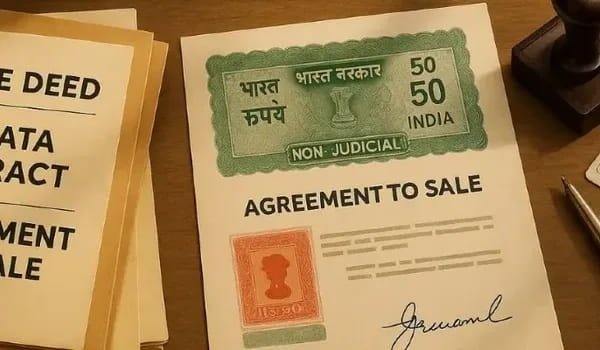
Step 13: Read the Agreement for Sale Carefully
Do not treat the Agreement for Sale as a routine formality. Read it before making a major payment.
- Check the total property price and payment schedule.
- Verify carpet area or land area.
- Check the possession date and delay clauses.
- Review parking, amenities, taxes and additional charges.
- Understand cancellation, refund, default and indemnity clauses.
- Make sure all promises made by the seller or builder are reflected in writing.
Step 14: Do a Final Check Before Registration
Before paying the final amount and signing the sale deed, review the complete file one last time.
- Confirm that the seller’s title is clear.
- Make sure encumbrance and mortgage issues are resolved.
- Check that taxes and other dues are cleared.
- Verify that required approvals are available.
- Confirm the property description and sale consideration.
- Check the spelling of names, PAN details and property particulars before registration.
The Most Important Rule Before Buying
Never buy a property only because a broker says the documents are clear, a bank has approved loans in the project or other buyers have already purchased there. These points may provide some reassurance, but they are not substitutes for independent verification. For a major property purchase, getting the documents checked by a competent property lawyer before signing is usually far safer than trying to resolve a title dispute after the purchase.
Frequently Asked Questions
1. Is a registered sale deed enough to prove that a property is safe to buy?
No. A registered sale deed is important, but buyers should also check the ownership chain, encumbrances, approvals, taxes, land records and any disputes affecting the property.
2. How do I know whether a property has a bank loan on it?
Check the title documents, Encumbrance Certificate and information provided by the seller. If a loan is outstanding, obtain the lender’s details and ensure the mortgage is properly closed or released as part of the sale.
4. Should I check RERA before buying a flat?
Yes, if the project is required to be registered under RERA. The relevant state or UT RERA portal can help you verify registration, promoter details, approved plans, declared completion schedule and other project disclosures.
5. Should I hire a lawyer even if I am taking a home loan?
It is still advisable. A bank’s legal check is done for its lending decision and should not automatically be treated as a complete substitute for the buyer’s own title and document verification.