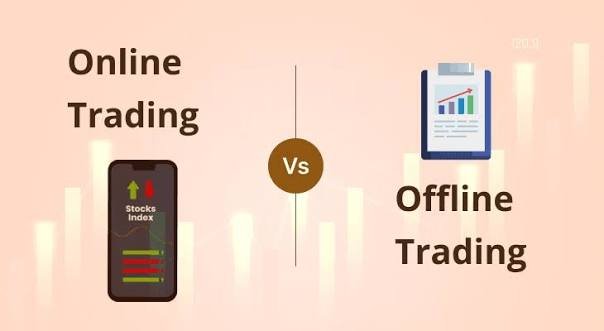
Online trading and offline trading are two ways to place orders in the financial market. With online trading, a person uses a mobile app or website to check prices and place orders directly. With offline trading, the person gives instructions to a broker or dealer, who enters the order. Both methods connect the client to the same market, but the experience is different.
Online trading is usually faster and more convenient, while offline trading offers direct human support. Neither convenience nor personal assistance guarantees better results. The better choice depends on your comfort with technology, need for guidance, trading frequency, costs and ability to check every order carefully.
What Is Online Trading?
Online trading means using a broker’s mobile application, website or trading terminal to manage market transactions. A user can view prices, charts, balances and positions, then place, change or cancel an order. Platforms may also provide contract notes, statements, trade history and alerts.
The order still passes through the broker and market system. The app is only the interface, so a fast screen cannot guarantee an expected execution price when the market is moving quickly or liquidity is low.
What Is Offline Trading?
Offline trading, also called assisted or phone-based trading, involves giving instructions through a broker’s dealing desk, branch or relationship manager. The representative enters the order on the client’s behalf. This can suit beginners, people who dislike apps or clients handling an unusual request.
The client should still confirm the details, receive a trade confirmation and review the contract note. The broker enters the order, but the client remains responsible for understanding and approving the instruction.
Online Trading and Offline Trading: Key Differences
1. Speed and Convenience
Online trading gives direct access to the account and lets a user watch prices, place orders and manage positions without waiting for a dealer. This is useful when a strategy needs quick action or when the market is changing rapidly.
Offline trading depends on the broker, phone lines and dealing staff, so it may take longer during busy periods. A representative can repeat the request and clarify a basic process, which helps someone who prefers personal assistance.
2. Costs and Charges
Online platforms may have lower brokerage because the client completes most tasks independently. The actual cost depends on the broker and product. Check brokerage, taxes, exchange fees, account maintenance, data services and other charges.
Offline trading may include assisted dealing or call-and-trade charges because staff place the order. Compare the fee schedule and decide whether the extra support is worth the cost.
3. Control and Order Accuracy
Online trading gives direct control, but the user must select the correct instrument, action, quantity, price and order type. A wrong tap, extra zero or wrong product selection can create an unwanted trade.
With offline trading, the representative repeats and enters the instruction, but communication mistakes are still possible. Verify the scrip or contract, buy or sell direction, quantity, price, product type, validity and charges. Keep the confirmation.
4. Personal Support and Guidance
The main advantage of offline trading is human support. A broker or dealer may explain a process, answer a question or help resolve an account issue. This can make the first experience less confusing.
Online brokers may offer FAQs, chat, email and phone support for routine problems, but the interaction may be less personal. Support is not the same as investment advice, and claims of guaranteed returns should be treated carefully.
5. Technology and Reliability
Online trading depends on an internet connection, device, application, login system and order servers. A weak network, service interruption or delayed data can affect the experience. Know the broker’s official support number and alternate order process before a problem occurs.
Offline trading can help when an app or internet connection fails, but phone lines may be busy and staff unavailable. Neither method is free from operational risk, so keep confirmations and check the order book or statement afterward.
6. Security and Fraud Risks
Online users must protect passwords, personal identification numbers and one-time passwords. Use the broker’s official app or website, enable security features, avoid unknown links and check orders regularly. Never share login details with a caller claiming to be a broker.
Offline users should deal only with authorised representatives and official contact details. Ask for written confirmation, review statements and report unfamiliar transactions quickly. Human contact can feel trustworthy, but it is not a substitute for verification.
Which Is Better for You?
Online trading is often better for a self-directed person who values convenience, direct control and potentially lower costs. It suits someone who can read the order screen, understand basic order types and stay calm during market movements. Practise with the platform before trading actively.
Offline trading may be better when personal help is more important than speed. Ask about assisted dealing charges, obtain confirmations and make independent decisions instead of treating a representative’s view as a promise of profit.
A hybrid approach can also work: use the online platform for routine orders and official broker support for account problems or complex requests. Know which channel is authorised, what it costs and how the order will be confirmed.
Final Thoughts
Online trading wins on speed, convenience and self-service. Offline trading wins on personal support and discussion with a representative. Neither method is automatically safer, cheaper or more profitable. The broker’s quality, account security and order accuracy matter in both cases.
Choose the method you can use carefully and consistently. Keep contact details updated, verify every trade, protect account access and maintain records. Technology makes market access easier, but good decisions still require knowledge, patience and risk control.
Frequently Asked Questions
Q1. Can online trading be used for long-term investing, or only quick trades?
Online trading can be used for both short-term orders and long-term investing. The platform is only the method used to place the transaction. The holding period depends on the plan and product selected, not on whether the order was placed online or through a broker.
Q2. What should I confirm before placing an assisted or phone order?
Confirm the instrument, buy or sell direction, quantity, price, order type, product category and validity. Ask about charges and request the order number or trade confirmation. If any detail is unclear, do not approve the instruction.
Q3. What should I do if an online order appears stuck or duplicated?
Do not immediately place the same order again. Check the order book, trade book, funds and positions because it may already be pending or executed. Take a screenshot if needed and contact the broker through its official support channel to prevent a duplicate trade.
Q4. Does an offline broker guarantee better investment results?
No. A representative can assist with the process, but no order method guarantees a return. Results depend on the security, strategy, market conditions, costs and risk management. Be cautious if anyone promises fixed or guaranteed trading profits.
Q5. Can I switch between online and offline trading?
Many brokers provide both digital and assisted services, but channels and charges vary. Ask how to activate each service, verify official contact details and understand the fee schedule. Keep your registered mobile number and email address updated for confirmations.