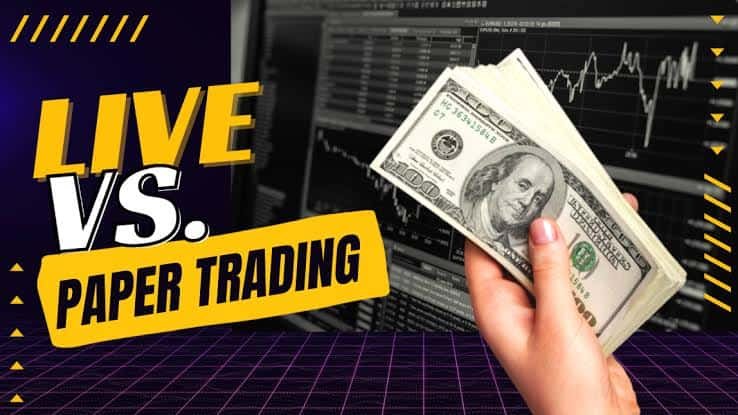
Every trader has to cross a difficult bridge at some point. On one side is paper trading, where you place trades with virtual money. On the other is live trading, where every decision can create a real profit or loss. The screen may look similar, but the experience is very different.
Paper trading is useful for learning the platform, testing a strategy and building confidence. Live trading teaches lessons that a simulator cannot fully copy, especially the pressure of watching real money move. For many beginners, the sensible path is to practise first and move to live trading slowly, with a small amount.
What Is Paper Trading?
Paper trading is simulated trading. You use virtual money to buy and sell shares, currencies, commodities, futures or other market products. The prices may come from real market data, but no real money is deposited or lost. Your account shows a practice profit or loss based on the trades you record.
A paper account can help you learn order types, charts, stop-losses, position sizing and trade records. It can show whether a strategy might have worked during a period. However, it may not include the same emotional pressure, execution problems or costs found in a live account.
What Is Live Trading?
Live trading means placing orders with real money through a trading account. When the order is executed, the result affects your actual capital. A profitable trade may increase your account, while a losing trade may reduce money you need for future trading or other goals.
Live trading requires more than market knowledge. You must control emotions, accept losses, follow rules and deal with real spreads, brokerage, taxes, slippage and delays. A strategy that looks successful on paper may feel harder when the position shows a real loss.
Paper Trading and Live Trading: Key Differences
1. Real Money and Real Risk
The biggest difference is simple: paper trading uses virtual money, while live trading uses your money. A simulator mistake may reduce a number on the screen. In a live account, the same mistake can affect your savings and confidence. Paper trading protects capital; live trading makes the result real.
2. Learning the Platform and Order Types
Paper trading is a safe way to learn market orders, limit orders, stop-losses and alerts. You can practise opening and closing positions without an expensive mistake. This is useful for someone unfamiliar with a broker’s app or a product such as futures or options.
3. Emotional Pressure
Paper trading can make a trader feel confident because there is no fear of losing personal money. Live trading brings fear, greed, hesitation and the temptation to change a plan. A trader may exit a winner too early or hold a loser too long. This is why paper success does not guarantee live success.
4. Execution, Slippage and Costs
A simulator may fill an order at the displayed price. In live trading, the actual price can be different when the market moves quickly or liquidity is low. Brokerage, taxes, exchange fees, spreads, funding costs and slippage can also reduce the final result. Include these costs in a realistic practice record.
5. Position Size and Risk Control
A paper trader may open a very large position because there is no real danger. That creates an unrealistic record. Live trading forces you to think about the amount at risk and whether you can accept the possible loss. Use a practice position size similar to what you may trade later.
6. Strategy Testing and Data Quality
Paper trading can answer basic questions: Does the strategy have clear entry and exit rules? Does it work in different conditions? How often does it lose? Record the reason, entry, stop-loss, target, exit and costs. A short winning streak is not enough evidence.
7. Discipline and Following Rules
Paper trading is valuable when you treat it seriously. Use the same rules, time frame and risk limit you would use with real money. Do not cancel a practice stop-loss because the loss is imaginary. Careless practice will not prepare you for live decisions.
8. Speed of Learning and Feedback
Paper trading lets you practise many situations at low cost and review mistakes calmly. Live trading gives stronger feedback because your emotions are involved, but the lessons can be expensive. A small live position may provide emotional training without creating a dangerous loss.
9. Confidence and Overconfidence
Paper trading can build confidence when you follow a tested plan. But a long practice profit may create overconfidence, especially if the account is much larger than your real capital. Live trading should begin small, without assuming paper results will continue unchanged.
Which Is Better for You?
Paper trading may be better for a beginner, someone learning a new market or a trader testing a strategy. It is also useful after a break or when changing from stocks to derivatives. The goal is to practise, record results and find mistakes before risking meaningful money.
Live trading may be suitable after you understand the product, know how orders work and can follow a written plan. Even then, start small. Trade an amount whose loss would not disturb your household budget, emergency savings or important goals. Increase size only after consistent discipline, not one lucky trade.
Many traders use both. They test ideas on paper, trade a small live position to understand their emotions and return to paper trading when they change their strategy. The aim is to enter the live market gradually, with realistic expectations and controlled risk.
Final Thoughts
Paper trading is safer and useful for learning, but cannot copy every part of live trading. Live trading provides real experience, but mistakes can be costly. Paper trading is usually the better first step; small, controlled live trading can follow after preparation.
Do not judge a strategy only by its biggest practice profit. Study losing trades, costs, drawdowns and performance in different conditions. A good trader focuses on process, risk control and discipline rather than quick money.
Frequently Asked Questions
Q1. How long should someone paper trade before using real money?
There is no fixed number of days. A trader should first understand the product, complete enough practice trades to see different outcomes and keep a detailed record. The move to live trading should depend on preparation and discipline, not on reaching an arbitrary number of wins.
Q2. Why do paper-trading profits disappear in a live account?
The practice result may not include real costs, delayed execution, wider spreads or emotional decisions. A trader may also use a larger position in live trading or change the plan after seeing a loss. The difference does not always mean the strategy is useless; it may show that the test was unrealistic.
Q3. Is a trading simulator useful for options and futures?
Yes, it can help you understand contract selection, margin, expiry, order placement and possible outcomes. But these products can be complex, and simulated results may not show every real execution or liquidity problem. Learn the contract rules before moving to a live position.
Q4. Should a trader paper trade after starting live trading?
Yes. Paper trading can be useful when testing a new strategy, reviewing a mistake or practising during a period of unusual market conditions. It may also help a trader reduce activity after a losing streak while continuing to study the market without adding more financial risk.