Most working professionals understand the need for health insurance and life insurance, but there is another financial risk that is often overlooked: surviving a serious accident with a disability that affects the ability to earn.
A life insurance policy generally pays when the insured person dies. Health insurance mainly pays eligible medical expenses. But an accident may leave a person alive, unable to work for months or permanently disabled, while household expenses, EMIs and children’s education costs continue.
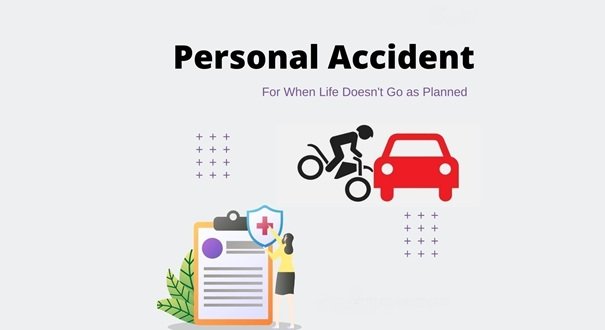
This is the gap that personal accident insurance is designed to address. Depending on the policy, it can provide benefits for accidental death, permanent total disability, permanent partial disability and sometimes temporary total disability. Some plans also provide accidental hospitalization, education or daily-cash benefits.
For working professionals whose family depends on their monthly income, this protection can be an important part of an overall insurance portfolio.
What Is Personal Accident Insurance?
Personal accident insurance provides financial compensation when an accident results in one of the events covered by the policy.
Typical benefits may include:
- Accidental death
- Permanent total disability
- Permanent partial disability
- Temporary total disability
- Accidental hospitalization expenses
- Hospital daily allowance
- Child education benefit
- Ambulance or transportation expenses
The exact benefits vary between insurers and products.
For example, ICICI Lombard’s current Personal Protect product covers accidental death and permanent total disablement and allows optional accidental hospitalization and hospital daily allowance benefits.
The standardised Saral Suraksha Bima personal accident structure also provides accidental death, permanent total disability and permanent partial disability as core benefits, with additional optional benefits available depending on the product.
Why Working Professionals Need More Than Life Insurance
Consider a 35-year-old salaried employee earning ₹80,000 per month.
Suppose an accident causes a permanent disability but the person survives.
A normal term life policy may not pay because the insured person is still alive.
Meanwhile:
- Salary may stop or reduce.
- Home loan EMI continues.
- School fees remain payable.
- Household expenses continue.
- Rehabilitation may be required.
- The home or vehicle may need modification.
Personal accident insurance is particularly valuable because disability can create a long-term income problem, not merely a one-time hospital bill.
1. It Protects Against Loss of Earning Ability
For a working person, one of the most valuable assets is future income.
A professional earning ₹10 lakh annually could potentially earn several crores over the remaining working life. A permanent disability that prevents employment can therefore have a financial impact far greater than the immediate treatment cost.
Personal accident insurance can provide a lump-sum benefit after qualifying permanent total disability.
Many plans provide 100% of the applicable sum insured for permanent total disability, subject to their definitions and policy conditions.
That money can help replace at least part of the income the person may no longer be able to earn.
2. Permanent Partial Disability Can Also Be Financially Serious
Not every disabling accident results in complete inability to work.
An individual may suffer permanent loss of:
- One hand
- One foot
- Sight in one eye
- Hearing
- Fingers or toes
- Use of another specified body part
Personal accident policies commonly pay a specified percentage of the sum insured according to the severity of permanent partial disability.
Under standard personal accident structures, different disabilities have predefined benefit percentages.
This can be particularly important for professionals whose occupation depends heavily on physical capability.
3. Temporary Disability Can Interrupt Salary
Some accidents do not cause permanent disability but can prevent a person from working for several weeks or months.
Examples might include serious fractures or injuries requiring prolonged recovery.
Certain comprehensive personal accident policies provide a Temporary Total Disability or TTD benefit, often as a fixed weekly payment for a limited period.
This can help meet expenses such as:
- Rent or home loan EMI
- Utility bills
- Groceries
- School expenses
- Regular loan repayments
Not every personal accident plan includes TTD, so this feature should be checked specifically when buying.
4. Health Insurance Does Not Fully Replace Accident Cover
Health insurance and accident insurance perform different jobs.
Health Insurance
Primarily pays eligible medical and hospitalization costs.
Personal Accident Insurance
Can pay a predefined benefit following death or disability caused by an accident.
Suppose an accident creates a ₹4 lakh hospital bill and also keeps the insured person away from work for six months.
Health insurance may help with the medical bill.
It generally does not replace six months of lost salary.
A personal accident policy containing suitable disability benefits can address part of that second problem.
5. It Can Protect Outstanding Loans
Many professionals have financial commitments such as:
- Home loans
- Vehicle loans
- Education loans
- Personal loans
An accident does not suspend EMI obligations.
If a person becomes permanently disabled, loan repayments can become difficult even if the family’s immediate medical expenses are covered.
A sufficiently large accident benefit can be used to:
- Repay some or all outstanding debt
- Create an EMI reserve
- Protect the family home
- Reduce monthly financial pressure
This is why the accident sum insured should be selected according to income and liabilities rather than choosing the smallest inexpensive plan.
6. Employer Accident Cover May Not Be Enough
Some companies provide group personal accident insurance to employees.
It is useful, but employees should check:
- Sum insured
- Disability benefits
- Whether temporary disability is included
- Whether the policy continues after leaving the job
- Whether coverage changes when the employer changes insurers
Employer-provided insurance is linked to employment and can therefore disappear when a person resigns, changes jobs or loses employment.
A personal policy provides independent protection that the individual controls.
7. Coverage Can Extend Beyond Road Accidents
Personal accident insurance is not simply “car accident insurance.”
Subject to the policy wording, accidental bodily injuries can arise from situations such as:
- Road accidents
- Falls
- Accidental burns
- Certain workplace accidents
- Other unforeseen accidental injuries
Some policies provide worldwide accident protection. ICICI Lombard’s current Personal Protect product, for example, advertises worldwide cover for accidental death and permanent total disability, subject to its terms.
The key requirement is that the event must meet the policy’s definition of an accident.
8. Occupation Can Affect Premium and Eligibility
Unlike many health insurance products, personal accident pricing can be strongly influenced by the nature of a person’s work.
Insurers may classify occupations into different risk groups.
Lower-risk occupations can include:
- Accountants
- Teachers
- Doctors
- Lawyers
- Bankers
- Office executives
Higher-risk categories can include occupations involving:
- Heavy machinery
- Construction
- Mining
- High-voltage electricity
- Working at heights
- Hazardous materials
Current HDFC ERGO documentation shows different occupation classes based on the physical and occupational risk associated with the insured person’s work.
Therefore, occupation must be disclosed correctly when buying the policy.
How Much Personal Accident Cover Should You Buy?
There is no universal amount.
A practical calculation should consider:
Outstanding loans + several years of family income + children’s major goals + rehabilitation needs – available financial assets
Income is particularly important because disability insurance is intended to protect earning capacity.
Some insurers also impose maximum cover according to annual income. HDFC ERGO’s current online personal accident calculator, for example, states that maximum compensation for an insured person under that product cannot exceed five times annual income.
Illustrative Example
Suppose a professional has:
- Annual income: ₹12 lakh
- Home loan outstanding: ₹30 lakh
- Family dependent on the income
- Limited emergency savings
A ₹5 lakh accident policy is unlikely to provide meaningful long-term protection after permanent disability.
A substantially larger cover should be evaluated within the insurer’s income-based eligibility rules.
Important Exclusions to Check
Personal accident insurance does not cover every injury.
Common exclusions can include injuries resulting from:
- Intentional self-injury
- Suicide or attempted suicide
- Certain intoxication-related circumstances
- Criminal acts
- War or nuclear risks
- Specified hazardous or adventure sports
- Events not meeting the policy definition of an accident
Individual policy wording can differ.
Professionals who regularly take part in adventure sports or hazardous activities should pay particular attention to exclusions.
Personal Accident Cover vs Accidental Death Rider
An accidental death rider attached to life insurance mainly provides additional benefit if the insured dies because of a qualifying accident.
A comprehensive standalone personal accident policy can potentially offer much broader protection, including:
- Accidental death
- Permanent total disability
- Permanent partial disability
- Temporary disability in eligible plans
- Accident-related supplementary benefits
For a working person, disability protection is often the main reason to consider a standalone accident policy rather than relying only on an accidental death rider.
What to Check Before Buying
Compare policies on:
- Accidental death sum insured
- Permanent total disability benefit
- Permanent partial disability schedule
- Temporary total disability benefit
- Income eligibility
- Occupational classification
- Worldwide coverage
- Accidental hospitalization cover
- Child education benefit
- Major exclusions
- Claim documentation
Do not compare only the annual premium.
A cheap death-only policy can provide significantly less protection than a policy that properly covers disability and income interruption.
Conclusion
Personal accident insurance is particularly important for working professionals because an accident can damage the ability to earn, even when life and health insurance remain in place. A useful policy should provide meaningful protection for permanent disability and, where required, temporary income interruption—not merely accidental death.
FAQs
1. Do I need personal accident insurance if I work from home?
Potentially yes. Accident risk is not limited to commuting or workplaces. Falls, road travel outside working hours and other unforeseen accidents can still result in disability. The need is linked mainly to financial dependence on your earning ability.
2. Is personal accident insurance useful if I already have term and health insurance?
Yes, because it covers a different risk. Term insurance mainly protects dependants after death, while health insurance covers eligible treatment expenses. Personal accident insurance can provide financial support when an accident leaves you alive but permanently or temporarily disabled.
3. Will the policy pay for any accidental fracture?
Not automatically under every plan. Some policies provide specific fracture or hospitalization benefits, while others focus only on death and specified disabilities. Check the benefit schedule before purchasing.
4. Can I hold more than one personal accident policy?
It may be possible to have multiple benefit-based accident covers, subject to each insurer’s eligibility and income limits. However, you should disclose existing coverage when requested and should not buy unrealistic amounts far beyond your financial profile.