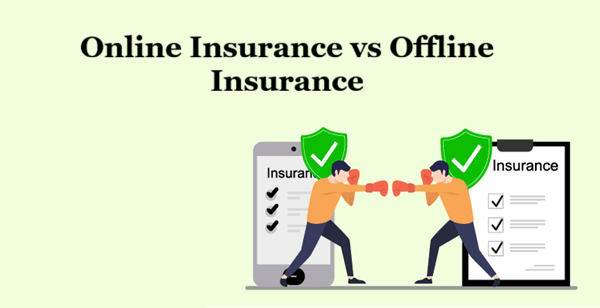
Buying an insurance policy is an important step towards protecting your finances against unexpected events such as medical emergencies, accidents, property damage, or the loss of a family earner. In India, insurance companies offer customers two main ways to purchase and manage policies: online and offline. Online insurance allows customers to explore plans, compare premiums, submit applications, and make payments through digital platforms. Offline insurance involves purchasing a policy with assistance from an insurance agent, visiting an insurer’s branch, or using other traditional distribution channels.
Both methods provide access to insurance coverage, but they differ in convenience, personal assistance, documentation, and policy management. Choosing the right method depends on your digital comfort, insurance knowledge, and need for professional guidance. Understanding the advantages and limitations of each option can help you make a more informed decision.
What Is Online Insurance?
Online insurance refers to purchasing and managing an insurance policy through digital platforms. Customers can visit an insurance company’s official website or mobile application to explore available products, calculate premiums, complete applications, and make payments.
Many insurers in India offer online facilities for health, life, term, motor, travel, and home insurance. Depending on the product, customers may also be able to renew policies, download documents, update certain details, and initiate claims online.
For example, a person purchasing term insurance can use an insurer’s website to select the coverage amount, policy duration, and available benefits. After providing the required personal and medical information, the customer can complete the application and payment process.
Online insurance is particularly useful for people who are comfortable using digital services and prefer handling transactions independently.
What Is Offline Insurance?
Offline insurance refers to purchasing insurance through traditional channels rather than completing the entire transaction digitally. Customers may visit an insurance company’s branch, contact an authorised insurance agent, or receive assistance through another permitted intermediary.
An agent can explain policy features, exclusions, premiums, waiting periods, and documentation requirements. They may also help customers complete proposal forms and understand the application process.
For example, someone purchasing health insurance for their parents may prefer discussing different coverage options with an insurance professional before selecting a plan.
Offline insurance can be useful for customers who prefer face-to-face communication or need assistance understanding complicated insurance products.
Online Insurance vs Offline Insurance: Key Differences
| Basis of comparison | Online insurance | Offline insurance |
| Purchasing method | Through websites and mobile applications | Through agents, branches, or traditional channels |
| Convenience | Available digitally, often at any time | Depends on branch or agent availability |
| Personal assistance | Mainly digital or remote support | Face-to-face guidance may be available |
| Policy comparison | Customers research and compare options independently | Agents explain products they are authorised to offer |
| Documentation | Usually submitted digitally | May involve physical or digital documentation |
| Payment | Online payment methods | Online payment or other accepted payment methods |
| Policy management | Often available through digital accounts | May involve contacting an agent or branch |
| Suitable for | Digitally comfortable customers | Customers who prefer personal assistance |
Major Differences Between Online and Offline Insurance
Purchasing Process
The online purchasing process is generally straightforward. Customers visit an insurer’s website, select a policy, enter the required details, review the premium, submit documents, and complete payment.
In offline insurance, customers may meet an agent or visit a branch to discuss their requirements. The representative explains available products and may assist with the application.
Online purchasing provides greater independence, while offline purchasing offers more direct human interaction.
Premium and Additional Costs
Many customers believe online insurance is always cheaper than offline insurance. However, this is not necessarily true.
Insurance premiums depend on factors such as age, health condition, sum insured, policy duration, location, vehicle details, risk profile, and selected benefits. The distribution channel alone does not determine the final premium.
Some online products may have different pricing or distribution-related cost structures, but customers should compare the actual premium for equivalent coverage. Also consider taxes, deductibles, add-ons, and other applicable charges.
Personal Guidance and Support
Online insurance requires customers to research policy features and understand the terms before purchasing. Insurers may provide online chat, telephone support, product brochures, and digital assistance, but customers are generally responsible for making their own selections.
Offline insurance can provide direct assistance from an agent or representative. This can be helpful when customers have questions about exclusions, waiting periods, claim requirements, or policy conditions.
However, customers should always verify important information in the official policy document, even when an agent explains it.
Documentation and Verification
Online insurance allows customers to submit many documents electronically. Depending on the policy, identity verification, address verification, medical information, and other requirements may be completed through digital processes.
Offline purchasing may involve submitting physical documents or receiving assistance with digital submissions. Some insurers still require additional verification or medical examinations regardless of the purchasing method.
The documentation requirements depend mainly on the insurance product and insurer’s procedures.
Policy Renewal and Management
Online platforms make it easier to manage many policy-related activities. Customers can often pay renewal premiums, download policy documents, check policy details, and submit service requests through websites or applications.
With offline insurance, customers may contact their agent or visit a branch for assistance. A reliable agent can be useful for reminders and guidance, but customers should not depend entirely on someone else to track important renewal dates.
Advantages of Online Insurance
Convenient purchasing: Customers can explore and purchase policies without visiting an insurance office.
Easy research: Product information, premium calculators, and policy documents are often available online.
Digital documentation: Many application and servicing activities can be completed electronically.
Flexible timing: Customers can access digital purchasing facilities outside normal branch hours, subject to platform availability.
Independent decision-making: Buyers can review policy information at their own pace without depending entirely on an intermediary.
Advantages of Offline Insurance
Personal interaction: Customers can discuss their insurance requirements directly with an agent or representative.
Application assistance: An agent may help complete forms and understand documentation requirements.
Useful for first-time buyers: People unfamiliar with insurance terminology may find personal explanations easier to understand.
Support with complex products: Professional guidance can be valuable when evaluating specialised health, life, or business insurance requirements.
Which Is Better: Online Insurance or Offline Insurance?
Neither method is universally better. The right choice depends on your comfort level, insurance knowledge, and support requirements.
Online insurance may be a better option if you are comfortable using digital platforms, understand policy conditions, and prefer researching products independently. It is also convenient for renewals and routine policy management.
Offline insurance may be more suitable if you are purchasing insurance for the first time, have difficulty understanding policy terminology, or prefer discussing your requirements with an insurance professional.
| Your requirement | Suitable option |
| You prefer buying policies digitally | Online insurance |
| You need personal guidance | Offline insurance |
| You are comfortable comparing policies | Online insurance |
| You need assistance with application forms | Offline insurance |
| You want convenient digital renewals | Online insurance |
| You are unfamiliar with insurance terms | Offline insurance |
Factors to Consider Before Choosing
Before purchasing insurance through either channel, evaluate these important factors:
- Coverage: Check whether the policy provides adequate financial protection.
- Exclusions: Understand the situations and expenses that are not covered.
- Premium: Compare the total payable amount for similar coverage.
- Claim process: Review the claim procedure and required documents.
- Insurer reputation: Consider customer service and claim-handling experience.
- Policy wording: Read the complete terms and conditions before making payment.
- Support availability: Choose a purchasing method that provides the assistance you may need.
Always provide accurate information in the proposal form. Incorrect or incomplete disclosures can create problems during claim assessment.
Conclusion
Online and offline insurance both offer reliable ways to purchase insurance in India when customers use authorised channels and select suitable policies. Online insurance provides convenience, digital accessibility, and independent purchasing, while offline insurance offers personal guidance and assistance throughout the buying process.
If you are comfortable researching insurance products and managing transactions digitally, online insurance may be more convenient. If you prefer face-to-face communication or need help understanding policy conditions, offline insurance may be a better fit. Ultimately, the quality of coverage, policy exclusions, insurer’s service, and claim conditions matter more than the purchasing channel.
Frequently Asked Questions (FAQs)
Q. Is online insurance cheaper than offline insurance in India?
Not always. Premiums depend on the insurer, coverage, customer risk profile, and policy features. Compare equivalent policies instead of assuming that online purchases are automatically cheaper.
Q. Is it safe to buy insurance online?
Yes, provided you purchase through an insurance company’s official website or an authorised platform. Check the website’s authenticity, provide accurate information, and save your payment receipt and policy documents.
Q. Can I claim insurance if I purchased my policy online?
Yes. Online policies provide the same contractual protection as offline policies when the coverage and policy terms are identical. Claims are assessed according to the policy conditions, not simply the purchasing method.
Q. Can I renew my offline insurance policy online?
In many cases, yes. Customers can often renew eligible existing policies through the insurer’s official website or application.
Q. Is offline insurance better for first-time buyers?
It can be helpful because an authorised agent or representative may explain policy benefits, exclusions, and application requirements. However, first-time buyers can also purchase online if they understand the policy and have access to reliable support.
Q. Does buying insurance online mean there is no agent commission?
Not necessarily. Distribution arrangements and remuneration depend on the product and applicable regulations. Customers should compare the final premium and coverage rather than assume that every online policy has no distribution-related costs.