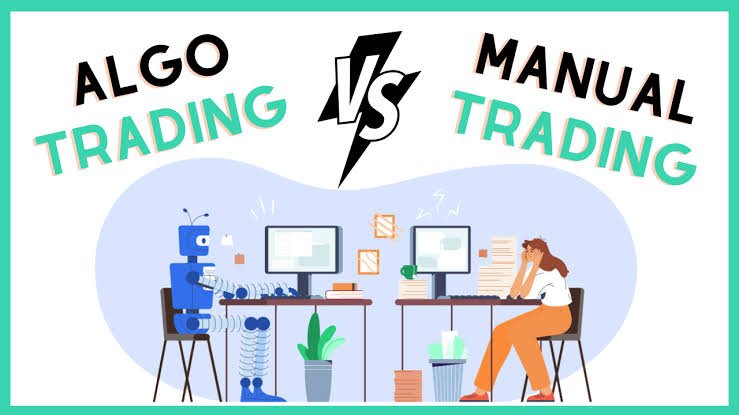
Manual trading and algorithmic trading are two different ways of making and executing market decisions. In manual trading, a person studies charts, news and market conditions before placing an order. In algorithmic trading, a computer follows a set of instructions and can place orders when predefined conditions are met. Both methods can be used in equities, futures, options, currencies and other markets.
The question is not simply whether a person or a computer is better. Manual trading offers judgement and flexibility when conditions change. Algorithmic trading offers speed, consistency and the ability to monitor many signals at once. But an algorithm only follows its design. A poor strategy can lose money faster, while a manual trader can make emotional mistakes. The better method depends on the trader’s skills, time, technology, strategy and ability to control risk.
What Is Manual Trading?
Manual trading is the traditional method in which a trader personally analyses the market and decides when to enter, hold or exit. The trader may use company information, economic news, charts, indicators, volume and experience before placing an order.
A manual trader can consider an unexpected management statement or sudden change in sentiment. However, quick decisions may be influenced by fear, greed, overconfidence or the desire to recover a loss.
What Is Algorithmic Trading?
Algorithmic trading uses computer instructions to analyse market data and generate or execute orders. The rules may tell the system to buy when a price crosses a moving average, sell at a stop-loss or act when price, volume and time conditions match.
The process involves creating a strategy, testing it with historical data, connecting it to a platform and monitoring performance. Automation reduces manual work but does not guarantee profit. Poor assumptions, faulty code, bad data, internet problems or new market conditions can cause failure.
Manual Trading and Algorithmic Trading: Key Differences
1. Speed and Execution
Manual trading depends on the person seeing a signal, interpreting it and placing an order. This may suit slower strategies, but prices can change before completion and traders may hesitate in a fast market.
An algorithm can scan data and send orders quickly when conditions are met. It can manage several instruments at once. Speed helps only when the strategy is sound and the system has safety checks; faster execution can also make mistakes more costly.
2. Emotions and Discipline
Manual traders may understand their strategy but fail to follow it under pressure. They may exit a winner too soon, hold a loser or take extra trades after a loss. Emotions remain part of human decision-making.
An algorithm follows programmed rules without fear or excitement, improving consistency. However, the designer can still interfere, change rules after a loss or stop a strategy during a temporary losing period.
3. Flexibility and Human Judgement
Manual trading is flexible. A trader can pause after unexpected news, avoid poor liquidity or change the plan after receiving new information. This judgement helps when markets behave unexpectedly.
An algorithm does not understand events like a person. Unless a rule covers a situation, it may continue trading or fail to act. Advanced systems still depend on programming and data quality.
4. Consistency and Repeatability
Manual results may vary because attention, mood and interpretation change. Two people can study the same chart and reach different conclusions. A journal and checklist can improve consistency.
Algorithmic trading applies the same rules to every qualifying situation, making the strategy easier to measure and review. Consistency does not mean correctness; a faulty rule can repeat the same mistake many times.
5. Costs, Skills and Technology
Manual trading usually needs a trading account, market data, research tools and time. Its setup may be simpler. Costs include transactions, spreads, brokerage and the trader’s time.
Algorithmic trading may require programming, historical data, testing tools, reliable internet, platform connections and maintenance. Software, data feeds or third-party services may add costs. The trader must understand the system rather than trust it blindly.
6. Testing and Risk Control
A manual trader can test an idea through chart study, paper trading and small real trades. Manual risk controls include position sizing, stop-losses, daily limits and avoiding unsuitable trades.
An algorithm can be backtested before live use, but past performance may not continue. The system needs limits on order size, losses, unusual prices and repeated orders, plus monitoring for technical failures.
Which Is Better for You?
Manual trading may suit someone who enjoys research, understands market context and can make calm decisions. It may be practical for slower strategies where a trader does not need to react within milliseconds. It also allows the trader to use judgement when the market does not match a familiar pattern.
Algorithmic trading may suit a person with a clearly defined, rule-based strategy and the ability to work with data or technology. It can help traders follow rules, scan many markets and avoid some emotional decisions. It is not suitable for someone who believes automation alone will create profits or who cannot monitor the system.
Many traders use a combination of both methods. A person may develop the strategy, use an algorithm for execution and supervise the risk manually. This can bring together human judgement and automation, but it still requires clear responsibility and regular monitoring.
Final Thoughts
Manual trading is more personal and flexible, while algorithmic trading is faster, more systematic and easier to repeat. Manual traders can understand changing context, but they may struggle with emotions and speed. Algorithms can follow rules without hesitation, but they can repeat errors and fail when market conditions change.
The better method is the one the trader understands, tests and can control. Before choosing automation, build a strategy that makes sense without marketing promises. Before choosing manual trading, create written rules and practise discipline. In both cases, protect capital, control position size and know the worst possible outcome.
Frequently Asked Questions
Q1. Does algorithmic trading mean high-frequency trading?
No. High-frequency trading is one specialised form of algorithmic trading that focuses on very fast orders and large volumes. An algorithm can also run a slow strategy that checks prices once every few minutes, once a day or at longer intervals.
Q2. Can an algorithm make decisions without internet access?
A live trading algorithm normally needs a reliable connection to receive market data and send orders. If the connection fails, data becomes delayed or the broker link stops working, orders may not be placed or managed correctly. Backup procedures and automatic safety limits are important.
Q3. Is backtesting proof that an algorithm will make money?
No. Backtesting shows how a set of rules would have performed on selected historical data. Real trading includes spreads, slippage, delays, changing liquidity and unexpected events. A strategy can also be overfitted to past data and fail in a new market environment.
Q4. Can a beginner use algorithmic trading without coding?
Some platforms offer no-code or ready-made tools, but the user still needs to understand the rules, costs, risks and permissions involved. A simple interface does not make the strategy safe. Beginners should test carefully and avoid relying on claims of guaranteed returns.