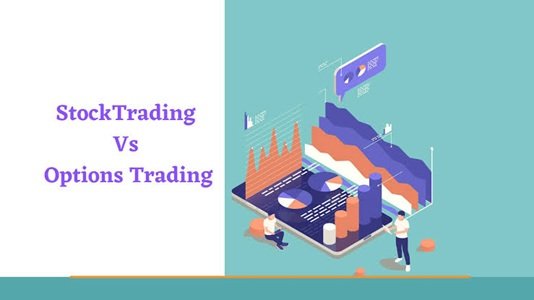
Stocks and options can both be used to take a view on the market, but they work in different ways. When you buy shares, you own a piece of a company and can hold it while your plan remains attractive. When you buy an option, you buy a time-limited contract whose value depends on the share price, time left and market expectations.
That difference can change the entire trading experience. Stock trading is usually easier to understand and can support long-term wealth building, while options can offer flexibility and hedging but require more knowledge. Neither is automatically better. The right choice depends on your goal, time horizon, capital, risk tolerance and ability to understand the trade before entering.
What Is Stock Trading?
Stock trading means buying or selling shares of a publicly listed company. A shareholder may hold the stock for minutes, days, months or many years. The result mainly depends on the difference between the purchase price and selling price, along with dividends or other shareholder benefits when applicable.
A stock trader may study company results, valuation, industry conditions, price charts, news and market sentiment. If the share price rises, the holding may gain value. However, a stock can remain flat or fall sharply after weak results, unexpected news or a broad market decline.
What Is Options Trading?
An option is a contract connected to an underlying asset, such as a stock or index. A call gives the buyer the right, but not the obligation, to buy at a fixed price before or on expiry. A put gives the right to sell at a fixed price. The buyer pays a premium for this right.
Options can be bought or sold, and their prices are affected by the stock, time remaining, expected volatility, strike price and demand. This makes them flexible but complicated. An option buyer can lose the entire premium, while some selling strategies can create much larger or theoretically unlimited losses.
Options Trading and Stock Trading: Key Differences
1. Ownership and Contract Structure
Buying a stock gives you ownership in the company. Shares do not expire, so you can hold them until you decide to sell. Buying an option normally gives you a contract, not immediate ownership. It has a strike price, expiry date and contract size. If it expires without value, the contract ends.
2. Capital Required and Leverage
Buying shares usually requires the full purchase amount unless margin is used. An option may give exposure to more shares for a smaller upfront premium. This can make the percentage gain look attractive, but the same leverage magnifies losses. A smaller payment does not mean the trade is cheap or safe.
3. Time Limit and Expiry Risk
A share can recover after a temporary fall if the company remains sound and the investor can wait. An option has a deadline. Even if the stock eventually moves in the expected direction, the option may lose value or expire if the move comes too late. Time decay generally works against buyers as expiry approaches.
4. Profit Potential and Loss Limits
A stock buyer can benefit from a rise and may also receive dividends, but the holding can lose most or all of its value if the company fails badly. A call buyer may earn a large percentage return if the stock rises sufficiently before expiry, but the move must overcome the premium. A put buyer needs a large, timely fall.
The risk picture changes when options are sold. A covered call or cash-secured put is different from an uncovered option. Selling an uncovered call can expose the seller to very large losses if the stock rises sharply. Understand the worst-case outcome before selling any contract.
5. Ease of Analysis and Decision-Making
Stock analysis can involve company financials, valuation, sector trends, price action and market conditions. Options require these areas plus strike selection, expiry, implied volatility, Greeks, open interest, spreads and assignment rules. A correct view about the stock is not enough if the option is selected poorly.
6. Flexibility and Possible Uses
Stocks are commonly used for ownership, swing trading, dividend income and diversification. Options can be used for directional trades, income strategies, hedging, defined-risk speculation or temporary exposure with less upfront capital. Their flexibility helps only when the trader understands each strategy’s conditions.
7. Costs, Liquidity and Management
Stock trades involve brokerage, taxes, exchange charges and the spread between buying and selling prices. Options have these costs too, but spreads can be wider and contracts harder to exit in a fast market. Time and volatility can also change an option’s value when the stock barely moves.
8. Emotional Pressure and Practical Risk
Stock investors may be able to wait if their long-term thesis remains valid. Option buyers face a ticking clock, while sellers may face sudden margin pressure in a fast market. In both markets, oversized positions and the hope of recovering losses can lead to damaging decisions.
Which Is Better for You?
Stock trading may be the better starting point for a beginner who wants a simpler product, long-term ownership and more time to review decisions. It may also suit investors building a diversified portfolio. The price can still fall, so research, position sizing and a realistic holding plan matter.
Options trading may suit an experienced participant who understands contracts, expiry, volatility and risk limits. It can be useful for a specific view, hedge or defined-risk strategy. Do not choose it merely because the premium is lower than the cost of shares or a tip promises quick returns.
Some people use both: stocks for a longer-term portfolio and defined options for a separate purpose. Keeping the plans separate prevents an unsuccessful option trade from becoming a confused long-term investment. Before using real money, study the contract terms, practise with a trade journal and know the maximum loss.
Final Thoughts
Stock trading is direct: you buy ownership and the shares do not expire. Options add a time limit, pricing variables and strategy-specific risks. Stocks may suit portfolio building, while options may help experienced traders who need leverage, hedging or a defined payoff.
The better choice is the one you can understand and manage without depending on luck. Do not use essential household money, emergency savings or borrowed funds for an untested strategy. Learn how the instrument works, limit the amount at risk and review the complete trade plan before entering.
Frequently Asked Questions
Q1. Can an option be held forever like a stock?
No. Every option has an expiry date. The holder must close it, exercise it where applicable or allow it to expire. A stock has no fixed expiry, although the company, exchange or corporate action can affect the investment. This time limit is one of the biggest differences between the two instruments.
Q2. Why can an option lose value when the stock price barely changes?
An option price depends on more than the stock price. Time passes every day, and expected volatility can rise or fall. If the stock does not move enough to offset time decay, the option may become less valuable even though the share price looks almost unchanged.
Q3. Is buying a cheap out-of-the-money option a good way to start?
A low premium can be misleading. The stock must make a sufficiently large move before expiry for the option to become profitable after costs. Many cheap options expire without value. A trader should compare the required price move, probability, time left and maximum loss instead of choosing only by premium.
Q4. Do stock traders need to understand options?
Not necessarily. Someone who only buys and sells shares can begin with stock-market basics, order types, company research and risk management. However, learning the basics of options is useful before accepting an options-related recommendation or buying a stock with an option strategy attached to it.