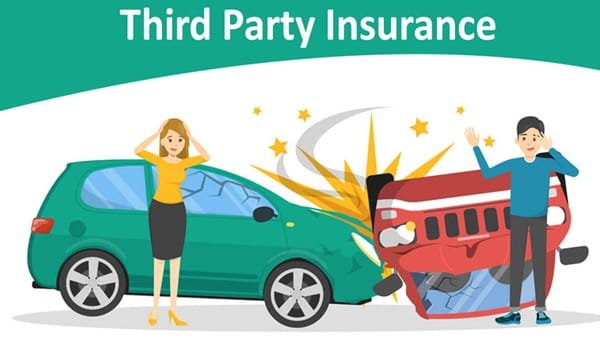
Third-party motor insurance is not an optional extra in India. It is the minimum insurance protection required by law for a vehicle used on public roads. Its purpose is not to repair the policyholder’s own car or two-wheeler, but to protect victims when the insured vehicle causes death, bodily injury or damage to someone else’s property.
This distinction is important. A vehicle owner may legally satisfy the basic insurance requirement with a liability-only policy, yet still have no insurance for theft, flood, fire or accident damage to the vehicle itself. For that protection, comprehensive or standalone own-damage insurance is required.
Section 146 of the Motor Vehicles Act, 1988 requires insurance against third-party risk, while IRDAI confirms that third-party liability insurance is mandatory for vehicles plying on public roads in India.
Here are the major rules every vehicle owner should understand.
What Is Third Party Motor Insurance?
In motor insurance there are broadly three parties:
- First party: vehicle owner or policyholder
- Second party: insurance company
- Third party: another person who suffers injury, death or property damage because of the insured vehicle
A third-party insurance policy protects the insured against legal liability to compensate that third party, subject to the Motor Vehicles Act and policy conditions.
It is also commonly called:
- Liability Only Policy
- Act Only Policy
- Third Party Liability Insurance
IRDAI recognises Liability Only cover as the statutory minimum form of motor insurance.
Is Third Party Insurance Compulsory in India?
Yes.
Section 146 of the Motor Vehicles Act deals specifically with the necessity for insurance against third-party risk. A motor vehicle generally cannot be used in a public place without the required insurance.
The requirement applies broadly to:
- Private cars
- Motorcycles and scooters
- Taxis
- Auto-rickshaws
- Buses
- Trucks
- Other motor vehicles
Buying only own-damage insurance without valid third-party cover would therefore not satisfy the legal requirement.
What Does Third Party Insurance Cover?
Third-party insurance mainly protects against two categories of liability.
1. Death or Bodily Injury to a Third Party
If your vehicle is involved in an accident and another person is injured or killed, third-party insurance can respond to the legal compensation liability.
IRDAI currently states that third-party liability cover provides unlimited coverage for third-party death or bodily injury, with compensation determined according to applicable law and the circumstances of the claim.
The injured person could include, depending on circumstances and legal coverage:
- Pedestrian
- Occupant of another vehicle
- Cyclist
- Other road user
The actual compensation is not simply a fixed amount chosen by the vehicle owner.
2. Damage to Third Party Property
Suppose your car hits:
- Another vehicle
- Boundary wall
- Shopfront
- Gate
- Other third-party property
The resulting legal liability can fall within third-party property-damage cover.
IRDAI currently states that third-party property damage is covered up to ₹7.5 lakh under standard liability insurance.
A policyholder can opt to restrict the property-damage limit to ₹6,000 in exchange for the prescribed reduction in premium, although this offers very limited practical protection for a serious accident.
What Third Party Insurance Does Not Cover
A liability-only policy is not comprehensive vehicle insurance.
It generally does not pay for damage to your own vehicle caused by:
- Accident
- Flood
- Cyclone
- Fire
- Theft
- Vandalism
- Falling objects
For these risks, the owner needs:
Comprehensive/Package Insurance
or
Standalone Own-Damage Insurance along with valid third-party insurance.
IRDAI specifically distinguishes third-party cover from own-damage protection.
Does Third Party Insurance Cover the Owner-Driver?
Third-party liability cover and personal accident cover for the owner-driver are different protections.
IRDAI has prescribed Compulsory Personal Accident (CPA) cover for eligible owner-drivers, with a minimum capital sum insured of ₹15 lakh under the applicable framework.
The owner-driver provision is subject to eligibility conditions, including the applicable driving-licence requirements.
Therefore:
Third-party insurance protects others.
CPA protects the eligible owner-driver against specified accidental death/disability risks.
Do not treat the two as the same cover.
Special Rule for New Cars
A person buying a brand-new private car cannot simply start with an ordinary one-year third-party policy.
IRDAI currently provides two main options for a new private car:
Bundled Policy
This generally provides:
- Own-damage cover for 1 year
- Third-party liability cover for 3 years
Long-Term Liability Only Policy
Third-party cover continues for:
3 years
The owner can arrange separate own-damage insurance if desired.
IRDAI states that an annual package or annual liability-only policy is not permitted as the initial policy for a new private car.
Special Rule for New Two-Wheelers
For a brand-new two-wheeler, the mandatory long-term third-party period is longer.
The available structure generally includes:
Bundled Policy
- Own damage: 1 year
- Third party: 5 years
or
Long-Term Liability Only Policy
- Third party: 5 years
IRDAI confirms the three-year requirement for new private cars and five-year requirement for new two-wheelers.
The own-damage portion of a bundled policy needs renewal after its first year if continued protection is wanted.
Is Third Party Premium Different Between Insurers?
For the statutory third-party portion, insurers do not independently price the risk in the same way they price own-damage insurance.
IRDAI states that third-party liability premiums are prescribed and are the same across insurers for the applicable vehicle category.
The premium can depend on vehicle characteristics such as:
Private Cars
Primarily engine capacity category.
Two-Wheelers
Engine capacity category.
Commercial Vehicles
Factors can include:
- Gross vehicle weight
- Passenger capacity
- Vehicle category
- Commercial use
The Motor Vehicles (Third Party Insurance Base Premium and Liability) Rules, 2022 remain listed by IRDAI as non-archived rules governing the applicable base-premium framework.
What Happens If You Drive Without Third Party Insurance?
Driving an uninsured motor vehicle is an offence.
As currently displayed in India Code, Section 196 provides that driving, causing or allowing a vehicle to be driven contrary to Section 146 can result in:
- First offence: fine of ₹2,000, imprisonment up to three months, or both
- Subsequent offence: fine of ₹4,000, imprisonment up to three months, or both
More importantly, an uninsured owner may personally face the financial consequences if the vehicle causes serious injury, death or property damage.
A compensation liability arising from a major accident can be far greater than the insurance premium saved by allowing the policy to expire.
Does Third Party Insurance Need Renewal Every Year?
For vehicles that are no longer within their initial compulsory long-term third-party period, motor insurance generally requires renewal before expiry.
IRDAI advises approaching the insurer at least 15 days before the existing policy expires.
Unlike some other financial products, vehicle owners should not assume there is a free grace period during which they can continue driving uninsured.
Check the expiry date well in advance.
What Happens After a Third Party Accident?
If your vehicle is involved in an accident involving another person or property:
- Stop safely.
- Arrange medical assistance where necessary.
- Inform the police in serious injury, death or other legally reportable cases.
- Inform the insurer immediately.
- Record vehicle numbers and accident details.
- Take photographs where safe.
- Do not make false statements about how the accident occurred.
- Forward legal notices or claim documents to the insurer promptly.
Third-party compensation claims are generally dealt with under the Motor Vehicles Act through the Motor Accident Claims Tribunal (MACT) system.
Section 166 permits an application for compensation by, among others:
- The injured person
- Owner of damaged property
- Legal representatives where death occurs
- An authorised representative in specified circumstances
Can the Insurer Always Be Forced to Pay Regardless of How the Vehicle Was Used?
No. Insurance policies contain legal and contractual conditions.
Problems can arise in cases involving matters such as:
- Invalid driving licence
- Vehicle being used outside permitted purpose
- Commercial use of a private vehicle
- Serious breach of policy conditions
- Other statutory defences available to the insurer
However, third-party motor insurance has a strong victim-protection purpose, and the legal position can be more complex than an ordinary own-damage claim. Courts may address the rights of the third party separately from disputes between the insurer and vehicle owner.
For a serious accident involving injury or death, legal advice should be obtained rather than assuming that a policy breach automatically ends every liability.
Third Party vs Comprehensive Car Insurance
| Feature | Third Party Only | Comprehensive |
| Legally required liability cover | Yes | Yes |
| Third-party injury/death | Yes | Yes |
| Third-party property damage | Yes | Yes |
| Accident damage to own car | No | Yes, subject to terms |
| Theft of own car | No | Yes |
| Flood/fire damage | No | Yes |
| Add-ons such as zero depreciation | Generally no | Can be added |
| Cost | Lower | Higher |
For an old vehicle with very low market value, some owners may deliberately choose liability-only insurance.
For a new or valuable vehicle, comprehensive protection usually provides much broader financial security.
What Should You Check Before Buying?
Before paying for a motor policy, confirm:
- Vehicle registration details
- Chassis and engine number
- Policy start and expiry date
- Correct vehicle category
- Third-party coverage period
- Property-damage limit
- Owner-driver CPA position
- Whether own-damage cover is included
- Add-ons, if any
Also make sure the policy is issued by an IRDAI-registered insurer and keep a digital or physical copy available.
Conclusion
Third-party automobile insurance is the legal minimum protection required for vehicles using Indian public roads. It primarily covers legal liability for third-party death, injury and property damage but does not protect the insured vehicle itself. Vehicle owners should keep the cover continuously valid and consider comprehensive insurance when they also want protection for their own vehicle.
FAQs
1. Can traffic police fine me if I have comprehensive insurance but no separate third-party policy?
A valid comprehensive/package policy normally already includes the statutory third-party liability section. You do not need to purchase duplicate third-party insurance for the same period.
2. Will third-party insurance repair my car if another vehicle hits me?
Your own third-party policy does not cover damage to your vehicle. Depending on the circumstances, you may claim under your own comprehensive/own-damage policy or pursue liability against the responsible party.
3. If my car is not being used, do I still need third-party insurance?
The statutory requirement concerns use of a motor vehicle in a public place. However, allowing the policy to lapse can create problems when the vehicle is put back on the road, so renewal should be planned before using it again.
4. Is ₹7.5 lakh the maximum compensation for a person injured in an accident?
No. The ₹7.5 lakh figure refers to third-party property damage under standard liability cover. IRDAI states that coverage for third-party death and bodily injury is unlimited, with compensation determined under applicable law.