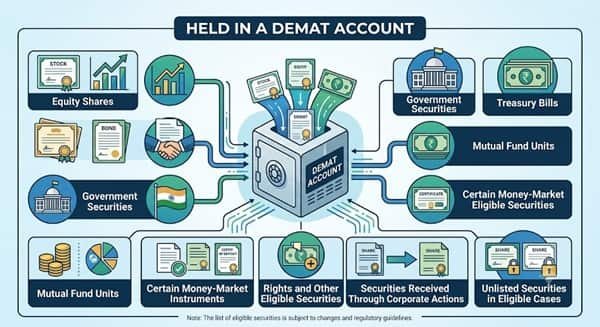
An Initial Public Offering (IPO) gives investors an opportunity to apply for shares of a company before or as it becomes publicly listed. However, applying for an IPO is different from buying shares after they begin trading on a stock exchange. One of the most important requirements for an IPO applicant is having an active Demat account.
Yes, a Demat account is required for applying for and receiving shares through an IPO in India. SEBI states that shares allotted through IPOs and FPOs can be given to investors only in Demat form. An IPO application without a Demat account cannot be processed for allotment.

Understanding why the Demat account is necessary, how it works with the IPO application, and what happens to your money and shares during the process can make IPO investing easier for beginners.
What Is an IPO?
An IPO is a process through which a company offers its shares to the public for the first time. Before the IPO, the company’s shares are held by existing shareholders and other investors according to its ownership structure. Through the public issue, eligible investors can apply for shares offered under the issue.
An IPO normally has an issue period, during which investors submit bids. After the issue closes, the applications are processed and shares are allotted according to the applicable rules.
If shares are allotted, they are credited electronically to the investor’s Demat account. This is why having an active and correctly linked Demat account is an essential part of the IPO application process.
Why Is a Demat Account Necessary for an IPO?
The main reason is simple: IPO shares are allotted in Demat form.
SEBI’s investor FAQ specifically states that shares allotted from IPOs and FPOs can be given to investors only in Demat mode. Consequently, an applicant needs a Demat account to receive the shares.
A Demat account provides the electronic record in which the allotted securities can be credited.
This also eliminates the need for physical share certificates for newly allotted listed securities.
Do You Need a Trading Account Too?
This is an important distinction.
A Demat account is required to receive and hold the IPO shares, while a Trading account is generally used to buy and sell securities through a stockbroker after listing.
For the IPO application itself, the crucial requirement is the Demat account along with the permitted application and payment mechanism.
Therefore, investors should not assume that the Demat account and Trading account are the same thing.
NSE describes a Trading account as an account opened with a stockbroker and explains its role in connecting an investor’s bank and Demat arrangements.
How Does an IPO Application Work?
The process can be understood in a few stages.
1. Open an Active Demat Account
Before applying, the investor needs an active Demat account with a Depository Participant. The relevant Demat details, including the DP ID and Client ID or equivalent account information, must be entered correctly.
SEBI advises investors to ensure that their Demat account is active and that the Demat details and PAN mentioned in the application are correct.
2. Complete KYC Requirements
The investor must meet applicable KYC requirements and provide the necessary details, including PAN.
Incorrect or mismatched information can create problems during application processing.
3. Submit the IPO Application
Investors can apply through permitted channels using the applicable ASBA process. Retail investors can also use the UPI mechanism where available.
NSE explains that ASBA allows the application money to remain blocked in the investor’s bank account until the allotment process is finalised, rather than requiring the money to be immediately transferred to the issuer.
4. Authorise the Payment
When using UPI, the investor receives a mandate request through the applicable process. The investor needs to authorise the mandate so that the required amount can be blocked.
The money is generally not treated as an ordinary payment simply because an IPO application has been submitted. Instead, the permitted ASBA mechanism blocks the required amount in the investor’s bank account.
5. Allotment Is Finalised
After the IPO closes, the applications are processed and the basis of allotment is finalised according to the applicable rules.
If the investor receives an allotment, the amount corresponding to the allotted shares is debited according to the process.
If the investor does not receive an allotment, the blocked amount is released.
6. Shares Are Credited to the Demat Account
For successful applicants, the allotted shares are credited electronically to the Demat account.
This is the stage where the importance of the Demat account becomes especially clear. The account is the electronic destination for the securities allotted through the IPO.
What Happens If You Do Not Have a Demat Account?
An investor cannot normally apply for an IPO with the intention of receiving newly allotted shares later in physical certificate form.
SEBI specifically states that an application without a Demat account will not be able to apply for an IPO because IPO/FPO allotments are made only in Demat mode.
Therefore, investors who are interested in applying for IPOs should arrange an active Demat account before submitting an application.
Can You Apply Through UPI Without a Demat Account?
No.
UPI is only a payment and mandate mechanism. It does not replace the Demat account.
An investor may use UPI for the applicable IPO application process, but the shares, if allotted, still need to be credited to an eligible Demat account.
In other words:
UPI helps with the payment authorisation.
Demat holds the allotted shares.
These are two separate functions.
What If the Demat Details Are Incorrect?
Incorrect Demat information can cause an IPO application to be rejected or create problems with processing and credit.
SEBI advises investors to make sure that the Demat account is active and that the DP ID, Client ID, PAN and other relevant details match the information available in the depository records.
This is particularly important because the IPO processing system uses these details to identify the investor and credit securities correctly.
Investors should therefore avoid entering Demat details from memory if they are unsure. They should verify the information from their account records before submitting the application.
Demat Account Requirement for IPOs: Quick Comparison
| Requirement | Needed for IPO? | Purpose |
| Demat account | Yes | Receives and holds allotted shares |
| PAN | Yes | Investor identification and regulatory requirement |
| Bank account | Yes | Provides funds for application |
| ASBA | Yes, through the applicable process | Blocks application money |
| UPI | Available for eligible applications | Authorises payment mandate |
| Trading account | Not the same as Demat requirement | Used for buying/selling securities through a broker after listing |
| KYC | Yes | Investor verification |
The exact application process can vary by investor category and issue structure, so applicants should always read the relevant IPO documents and current instructions.
Tips for Applying for an IPO
Before submitting an IPO application, investors should:
- Make sure the Demat account is active.
- Verify the DP ID and Client ID.
- Ensure PAN details are correct.
- Use the investor’s own eligible bank account and UPI ID where applicable.
- Keep sufficient funds available for the application.
- Check the IPO’s price band and lot size.
- Submit the application before the closing deadline.
- Confirm the UPI mandate within the prescribed time when using UPI.
- Avoid sharing UPI PINs, passwords or authentication credentials.
- Read the company’s offer documents before investing.
NSE’s current IPO information also highlights the importance of timely UPI mandate confirmation for applications using the UPI mechanism.
Conclusion
A Demat account is required for applying for and receiving IPO shares in India because shares allotted through IPOs are issued to successful applicants only in Demat form. The Demat account provides the electronic holding facility, while the bank account and ASBA/UPI mechanism handle the application funds.
The process can therefore be viewed as three connected parts: the Demat account receives the shares, the bank account provides the application funds, and ASBA/UPI facilitates the blocking and payment process.
Before applying, investors should verify their Demat details, PAN, bank account and UPI information where applicable. They should also remember that IPO allotment does not guarantee investment gains. The decision to apply should be based on the company’s offer documents, financial information, risks, valuation and the investor’s own circumstances.
Frequently Asked Questions
Q. Is a Demat account compulsory for an IPO?
Yes. IPO shares are allotted only in Demat form, so an eligible Demat account is required to apply for and receive IPO shares.
Q. Can I apply for an IPO using only a bank account?
No. A bank account is required for the payment or ASBA process, but an active Demat account is also required because allotted shares are credited electronically.
Q. Can I apply for an IPO using UPI?
Eligible investors can use the UPI mechanism for IPO applications. However, UPI does not replace the Demat account.
Q. Do I need a Trading account to apply for an IPO?
The Demat account is essential for receiving the allotted shares. A Trading account serves a different purpose and is generally used when buying or selling securities through a stockbroker.
Q. What happens if I don’t get IPO allotment?
If shares are not allotted, the amount blocked for the application is released according to the applicable ASBA/UPI process.