Investing in the stock market involves more than simply selecting a company and buying its shares. Behind every electronic stock transaction are different accounts and intermediaries that help move money, execute orders and record ownership. Two of the most important are the Demat account and Trading account.
Although these accounts are often opened together through a broker, they serve different purposes. A Trading account is primarily used to buy and sell securities, while a Demat account is used to hold securities in electronic form. When connected with a bank account, these accounts create a system through which investors can transfer money, execute trades and receive or deliver securities.
What Is a Demat Account?
A Demat, or dematerialised, account is an account used to hold securities electronically. Instead of keeping physical share certificates, investors’ securities are represented through electronic records within the depository system.
In India, investors access depository services through a Depository Participant (DP). SEBI describes the Demat account as an account opened with a registered depository participant for holding and transferring securities.
The two recognised depositories in India are NSDL and CDSL. The DP acts as the interface through which an investor accesses depository services.
For example, if an investor purchases 50 shares of a listed company for delivery, those shares can ultimately be credited to the investor’s Demat account after settlement.
What Is a Trading Account?
A Trading account is used to place orders to buy or sell securities through a stockbroker. According to SEBI, it is an account opened by a registered stockbroker for trading in securities.
When an investor opens a Trading account, the broker provides access to its trading platform, which may be available through a website, mobile application or other permitted channels.
The investor can use this platform to:
- Search for securities and market prices
- Place buy and sell orders
- Monitor orders and trades
- View trading-related information
- Access transaction records provided by the broker
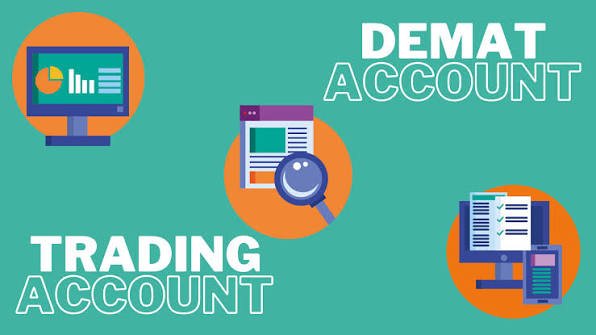
The Trading account therefore acts as the transaction channel, while the Demat account acts as the electronic holding account.
Demat Account vs Trading Account
The easiest way to understand the difference is to consider their primary functions.
| Feature | Demat Account | Trading Account |
| Main purpose | Holds securities electronically | Places buy and sell orders |
| Main service provider | Depository Participant | Stockbroker |
| Holds shares? | Yes | No, it records trading activity |
| Used for placing orders? | No | Yes |
| Connected with | Trading and bank arrangements | Demat and bank arrangements |
| Main role | Ownership/holding | Transaction/execution |
The two accounts complement each other but are not the same account.
NSDL similarly explains that a Demat account is different from a Trading account: securities purchased through a Trading account can be deposited into the Demat account, while existing securities can be sold through the Trading account.
How Do the Two Accounts Work Together?
Consider a simple example.
Suppose an investor wants to purchase 10 shares of a listed company for delivery.
Step 1: Money Is Made Available
The investor needs funds for the purchase and applicable charges. The bank account can be used to provide the required funds as part of the overall transaction arrangement.
SEBI identifies the bank account as the account used for paying or receiving funds related to securities-market transactions.
Step 2: The Buy Order Is Placed
The investor logs into the broker’s trading platform and enters a buy order.
The Trading account is involved in this process because it provides the mechanism through which the investor’s order is placed with the stockbroker.
Step 3: The Trade Is Executed
If the order is matched according to the applicable market mechanism, the purchase becomes a trade. Clearing and settlement processes then determine the transfer of funds and securities.
The Trading account therefore plays a central role in executing the transaction, but it is not the final electronic storage location for the shares.
Step 4: Shares Are Credited to the Demat Account
After settlement, the securities purchased for delivery are credited to the investor’s Demat account.
This is where the two accounts work together: the Trading account facilitates the purchase, while the Demat account records the securities held by the investor.
What Happens When You Sell Shares?
The process works in the opposite direction when an investor sells shares already held in the Demat account.
Suppose an investor owns 20 shares and decides to sell them.
The investor places a sell order through the Trading account. Once the trade is executed and the required settlement process is completed, the relevant securities are transferred or debited from the investor’s Demat holdings as applicable.
Therefore, the basic cycle can be represented as:
Bank Account → Funds → Trading Account → Buy Order → Trade → Settlement → Demat Account
For a sale:
Demat Account → Securities → Trading Account/Settlement Process → Sale → Funds → Bank Account
The exact settlement mechanics can vary depending on the type of security and transaction, but this simplified flow helps new investors understand the relationship between the accounts.
Where Does the Broker Fit In?
A common misconception is that the stockbroker itself is the place where an investor’s shares are permanently stored.
In reality, the broker provides trading services, while the Demat account operates through the depository framework. NSDL explains that investors need a Trading or Broking account with a SEBI-registered stockbroker if they want to buy or sell securities, while the Demat account is used to hold securities electronically.
This separation is important because executing a trade and recording securities ownership are related but distinct functions.
Why Are Both Accounts Usually Linked?
Having the accounts connected makes the investment process more convenient.
When an investor buys shares for delivery, the transaction needs both:
- A mechanism to execute the purchase.
- A mechanism to receive and hold the securities.
The Trading account addresses the first requirement, while the Demat account addresses the second.
A bank account adds the third part: handling the movement of money.
This is why many investors use arrangements commonly described as 2-in-1 or 3-in-1 accounts. NSDL notes that some financial institutions offer a 3-in-1 arrangement combining Demat, Trading and bank accounts.
Charges Associated With These Accounts
Demat and Trading accounts can have different types of charges.
Depending on the provider and services used, investors may encounter:
- Account maintenance charges
- Brokerage or transaction charges
- Depository-related charges
- Applicable taxes and statutory charges
- Charges for specific services or transactions
The exact fee structure varies between providers. Investors should read the broker’s and DP’s tariff schedule before opening an account rather than choosing an account based only on advertised brokerage.
SEBI also advises investors to understand brokerage, commissions, fees and other charges before activating a Trading account.
How Investors Can Manage Both Accounts Safely
Opening the accounts is only the beginning. Investors should also monitor their transactions and holdings regularly.
Useful practices include:
- Use only SEBI-registered intermediaries.
- Keep login credentials and authentication details secure.
- Check trade confirmations and transaction statements.
- Review Demat holdings periodically.
- Understand all charges before placing trades.
- Keep bank, Trading and Demat details updated.
- Avoid sharing passwords, PINs or authentication codes.
- Contact the broker or DP promptly if an unfamiliar transaction appears.
SEBI provides facilities for investors to check the registration status of market intermediaries, which can help investors verify whom they are dealing with.
Conclusion
A Demat account and Trading account perform different jobs, but they work together to make electronic investing possible. The Trading account facilitates buying and selling, while the Demat account holds securities electronically. The bank account handles the movement of money associated with transactions.
Understanding this relationship makes the stock-market process much easier for beginners. Instead of thinking of the Demat and Trading accounts as interchangeable, investors can view them as connected parts of one system: the Trading account helps execute the transaction, the settlement process transfers the securities, and the Demat account records the securities held by the investor.
Frequently Asked Questions
Q. Is a Demat account the same as a Trading account?
No. A Demat account holds securities electronically, while a Trading account is used to place buy and sell orders.
Q. Can I buy shares without a Trading account?
For exchange-based buying and selling through a stockbroker, a Trading account is generally used to place orders. The requirements can differ for different investment products and routes.
Q. Can I hold shares without actively trading?
Yes. Once securities are held in a Demat account, an investor can continue to hold them without regularly buying or selling them.
Q. Is a bank account also required?
A bank account is generally used to pay and receive funds related to securities transactions. SEBI identifies the bank account, Trading account and Demat account as distinct components of the securities-market investing process.