Buying shares today can feel as simple as tapping a button on an investment app. But after a purchase is completed, an important question often arises: Where are the shares actually stored?
The answer is the Demat account, but the term “stored” can be misleading. Shares are not kept inside your phone, broker’s app, or a physical digital locker. Instead, ownership of securities is represented through electronic records maintained within India’s depository system.
India has two recognised depositories—NSDL and CDSL. Investors access their depository services through Depository Participants (DPs), which include eligible financial intermediaries.
Understanding this structure helps investors see what happens to their securities after a purchase, how ownership is recorded, and how shares can later be transferred or sold.
What Does “Electronic Storage” Mean?
When securities are held in physical form, ownership is represented by certificates. Dematerialisation replaces those physical certificates with electronic records.
A Demat account is therefore an account used to hold securities in dematerialised form. NSDL describes a beneficiary account as an account opened with a Depository Participant to hold securities electronically and conduct transactions through the depository system.
For example, if an investor purchases 100 shares of a listed company, the investor does not receive 100 paper certificates. Instead, the relevant quantity is recorded electronically in the investor’s Demat account following the applicable settlement process.
The electronic record identifies the security and the quantity held.
Who Maintains the Electronic Records?
Several participants work together to make electronic securities ownership possible.
1. Investor
The investor is the beneficial owner of the securities held in the Demat account.
2. Depository Participant
The investor opens a Demat account through a Depository Participant (DP). The DP provides account-related services and acts as the interface between the investor and the depository.
3. Depository
The depository maintains the electronic securities infrastructure. India currently has two recognised depositories:
Central Depository Services (India) Limited, or CDSL
National Securities Depository Limited, or NSDL
SEBI lists both as recognised depositories in India.
4. Issuer and Market Infrastructure
The company or other issuer, stock exchanges, clearing corporations and related institutions interact with the depository system as required for issuance, trading and settlement.
This creates a coordinated system in which securities can be issued, transferred and recorded electronically.
How Is Your Ownership Recorded?
One of the most important concepts in the Demat system is the distinction between registered owner and beneficial owner.
When securities are dematerialised, the depository is treated as the registered owner for the limited purpose of facilitating transfers. However, the investor remains the beneficial owner and is entitled to the rights and benefits attached to the securities, subject to applicable law.
NSDL explains that ownership in the depository system is divided between the registered owner and beneficial owner, with the beneficial owner retaining the rights, duties and liabilities associated with the securities.
What Happens When You Buy Shares?
Consider a simple example.
Suppose you decide to buy 50 shares of XYZ Ltd.
Step 1: You Place a Buy Order
You use your trading account or investment platform to place an order.
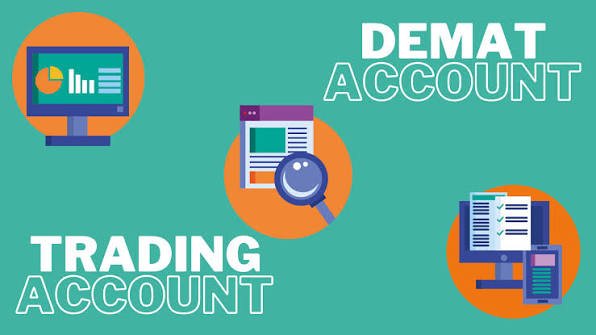
The trading account is different from your Demat account. The trading account facilitates the transaction, while the Demat account is used for holding the securities.
Step 2: The Trade Is Executed
If your order is matched according to the applicable market mechanism, the transaction is executed.
The securities then go through the relevant clearing and settlement process.
Step 3: Securities Are Delivered
The clearing and settlement infrastructure coordinates the delivery of securities and corresponding funds.
Step 4: Your Demat Account Is Credited
After settlement, the applicable quantity of shares is credited electronically to your Demat account.
Your account may then show the relevant security and a holding of 50 shares.
There is no physical certificate involved in this process.
Shares Are Represented by Electronic Book Entries
A useful way to understand Demat holdings is to think of them as electronic book entries.
NSDL describes the depository system as enabling securities to be transacted through a book-entry system. Transfers can occur by debiting the transferor’s account and crediting the transferee’s account.
So, when shares move between eligible accounts, the system does not physically move an object representing the shares. Instead, the relevant electronic records are updated.
For example:
Investor A’s account: 100 shares → 80 shares
Investor B’s account: 0 shares → 20 shares
The reduction and corresponding credit represent the transfer of securities.
How Are Different Securities Identified?
Electronic securities records need to identify exactly which security is being held.
Securities use identifiers such as an ISIN (International Securities Identification Number). This helps distinguish one security from another in the securities-market infrastructure.
Therefore, a Demat statement does not merely record that an investor owns “shares.” It records the particular security and the quantity held.
This becomes especially important for investors who own securities issued by several companies or different classes of securities.
What Happens When You Sell Shares?
The process essentially works in reverse.
Suppose your Demat account contains 50 shares of XYZ Ltd. and you decide to sell them.
You place a sell order through your trading account. Once the transaction is executed and the applicable settlement instructions are completed, the required securities are debited from your Demat account and transferred through the settlement system.
The electronic record therefore changes from the previous quantity to the new quantity.
What About Physical Share Certificates?
Dematerialisation also works in the opposite direction from the old paper-based system.
If an eligible investor holds securities in physical form, those securities can, subject to the applicable rules and process, be converted into electronic form.
The investor generally submits the required documents and certificates through the Depository Participant. Once the process is completed, the corresponding electronic securities are credited to the Demat account.
How Is the Electronic Record Kept Separate?
Another important feature is the separation of investors’ holdings.
The depository framework provides for separate accounts for beneficial owners. NSDL’s material explains that a beneficiary account is used to hold an investor’s securities and that the beneficial owner is legally entitled to the rights and liabilities attached to those securities.
This structure is important because investors’ securities are not simply treated as one undifferentiated pool belonging to the intermediary.
Is Electronic Storage the Same as Digital Money?
No.
A Demat account does not hold cash.
This distinction is important:
| Account | Main purpose |
| Bank account | Holds money |
| Trading account | Used to place securities-market orders |
| Demat account | Holds eligible securities electronically |
When you buy shares, money is handled through the applicable banking and trading arrangements, while the resulting securities are credited to the Demat account after settlement.
Can You Monitor Your Electronic Holdings?
Yes. Investors can generally access their holdings and transaction information through their DP or related account services.
Regular monitoring is useful because it allows investors to check:
- Securities held
- Quantity of each security
- Purchases and sales
- Credits and debits
- Corporate-action entries
- Other account activity
If an investor notices an unfamiliar or incorrect transaction, it is important to contact the relevant intermediary promptly.
Does Electronic Storage Remove Investment Risk?
No.
Electronic storage changes how securities are recorded and transferred. It does not guarantee the value of those securities.
For example, if you own shares worth ₹1 lakh, the Demat system records your ownership, but it does not guarantee that those shares will continue to be worth ₹1 lakh.
Market prices can rise or fall independently of the electronic storage mechanism.
Therefore, investors should distinguish between operational security of holding and investment risk.
Why Is Electronic Storage Important?
The shift from physical certificates to electronic records has made securities transactions more efficient.
It helps facilitate:
- Electronic transfer of securities
- Faster settlement processes
- Easier portfolio record-keeping
- Reduced dependence on physical certificates
- Processing of eligible corporate actions
- Digital access to holdings
- Electronic transmission and other depository services
SEBI’s depository framework includes maintaining records of securities held by beneficial owners, settling trades through delivery or receipt of securities, and processing electronic credits.
Conclusion
Securities are not literally “stored” inside a Demat app or on a broker’s computer. Instead, ownership is represented through electronic records maintained within India’s depository system.
The investor is the beneficial owner, the Depository Participant provides access and account services, and the depository operates the electronic infrastructure through which securities are recorded and transferred.
When shares are purchased, the applicable securities pass through the trading, clearing and settlement process before being credited to the investor’s Demat account. When they are sold, the corresponding electronic holding is debited and transferred through the settlement system.